The AI power bill is now a strategic issue, because chips and models are only one side of the equation. The AI industry has become a contest for energy, and governments are rewriting national policy to feed the machines.
1. In energy we trust
The evidence arrived from several continents at once. Canada unveiled a national strategy to build up to ten new large-scale nuclear reactors, with two under construction by 2035. Brazil announced a program with around $444 million to boost its AI ecosystem, splitting projects between Chinese and US companies. The European Commission delayed a data-center sustainability label amid a dispute over whether nuclear counts as clean energy. And New South Wales is preparing to require new data centers to source 40% of their power from wind.
These events are the new surface of an actual, structural shift that can redraw the power balances across the globe. AI has a power problem, and how each country solves it will define both its energy mix and, more importantly, its place in the technology race.
2. AI nuclear power makes a comeback
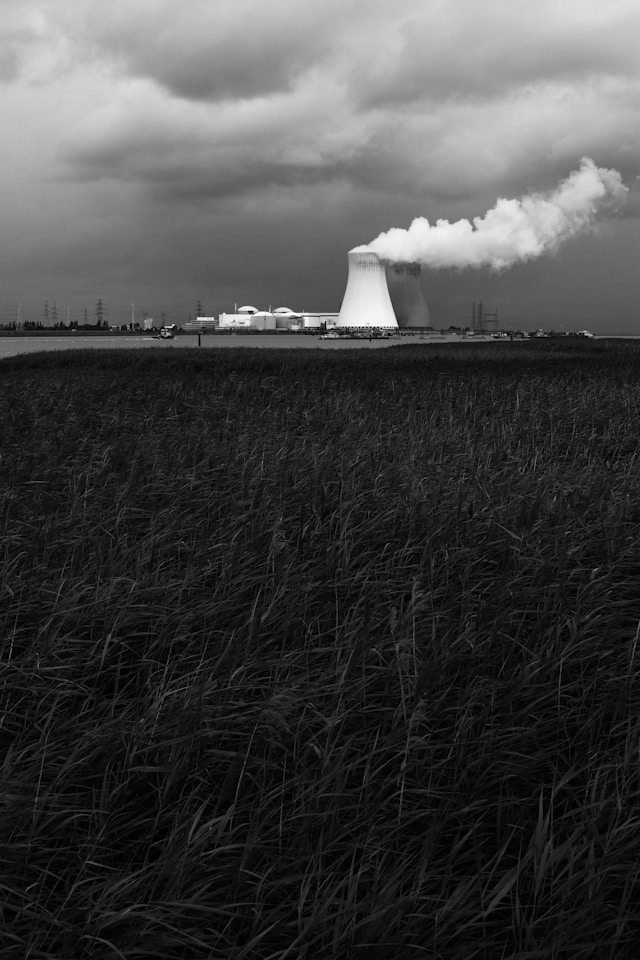
The most dramatic response is nuclear. Nuclear has carried a heavy reputation for decades. Chernobyl, Fukushima, you name it. What often gets lost is that nuclear energy production works like any other industrial sector, meaning it develops and improves over time. Today’s nuclear is light-years away from the nuclear of ten years ago, because the technology adapted to new threats each time and operational security improved after every incident. That does not mean nuclear has become harmless. It has not. But the industry has learned from each incident and developed new operational methods.
Still, the counter-narrative is strong, and it tends to ignore that energy consumption was not a public concern until AI arrived to demand so much of it. AI has become the new public enemy, but it is also one of the strongest catalysts of economic progress, and it calls for more energy. So countries have answered the call.
Canada’s strategy targets up to ten new large-scale reactors, with the first two under construction by 2035 and five more planned or under construction after that. The logic is direct. AI data centers need round-the-clock, emissions-free power at enormous scale, and nuclear is one of the few sources that can deliver it without intermittency.
The debate is not settled, though. The European Commission delayed a planned sustainability label for data centers after ten member states, including France and Italy, demanded that nuclear be treated as a clean source. This is the heart of the AI nuclear power fight. The Commission had argued there was no political mandate to promote low-carbon sources beyond renewables. The label was set to apply from August 2027, and its fate now hangs on whether nuclear gets a seat at the clean-energy table.
The irony is hard to miss. Europe once led the shift away from nuclear, and now several of its governments are pushing to bring it back, precisely because AI needs reliable, carbon-free power.
3. Renewables, with mandates attached
Not every country is turning to nuclear. New South Wales is taking the opposite path, planning to require new data centers to source 40% of their electricity from wind. This is regulation as industrial policy, forcing the AI build-out to plug into the state’s renewable grid. It does leave an open question, though. What happens to the data centers when the wind stops?
The two approaches are not mutually exclusive, but they reveal a real fork. Some governments see the AI energy demand as a reason to lean on nuclear’s scale and reliability. Others see it as a reason to push renewable mandates and keep the build-out on a decarbonization path. The choice shapes how fast data centers can be built, how much they cost, and who captures the value.
4. The geopolitics of compute and power
Brazil’s move shows that energy and computing strategy now intersect with great-power competition. Its roughly $444 million AI push splits projects between Chinese and US firms. More than half of that, about $251 million, funds a supercomputing project in Rio de Janeiro developed in partnership with China’s Huawei and iFlytek. A separate tender of about $193 million will build a supercomputer Brazil expects to rank among the world’s ten most powerful AI machines.
Brazil is trying to balance relations with both powers while building its own computing capacity. That is the new geopolitics of AI. Countries are no longer just buying chips, but also choosing which great power helps build their compute and the energy infrastructure to run it.
5. What this means for business and for people
For investors and companies, the signal is clear. Energy is now a first-order constraint on AI, and the winners will be the regions that can supply cheap, reliable, preferably low-carbon power. Utilities, nuclear suppliers, and grid builders have become indirect AI plays, which means that as AI grows, now and in the foreseeable future, these companies will grow too, because demand for their output, for energy and distribution, is and will remain huge.
For the average person, the consequence is twofold.
First, electricity prices and grid strain will follow the data-center build-out. Second, the political choices about nuclear, wind, and foreign partners will shape not just the cost of power, but the balance of power at the highest levels. The energy race and the AI race are now the same race, and it happens in our neighborhood too. No exception.
6. Power decides the pace of AI
The AI energy race is not a side note. Energy is the constraint that will decide how fast the technology can actually grow, and how much humankind can benefit from it. Countries that line up reliable, affordable power will host the AI economy and reap the vast majority of the direct rewards. Countries that fail to will import it, and pay for the privilege.
The next few years will show which energy bets pay off, from Canadian reactors to Australian wind farms to Brazilian supercomputers split between East and West. The machines need power, and the struggle to supply it is rewriting national energy policy, one data center at a time.